Pikmin 4 Cave Guide: Prepare, Explore and Return Safely
Prepare a Pikmin 4 cave squad, distinguish wild type access from Onion unlocks, and check each floor before moving deeper.
FAQ
Do these treasure counts include the surface?
Does a cave type encounter grant unlimited replacements?
What should you check at a cave entrance?
Read what the game tells you about the cave and compare it with the types you can bring. Choose a practical objective: rescue progress, a missing treasure, a new type encounter or reconnaissance. A focused visit is easier to review than a run that tries to solve every unknown at once.
Use the Pikmin reference to identify the job each type will do. Bring a reason for each slot. Oatchi carrying strength may free workers for a second job, but it does not remove every environmental hazard; consult the skill guide before treating training as a universal solution.
How do you plan a floor without an invented route?
Start by identifying safe space and the delivery destination. Then inspect nearby threats, obstacles and treasure. Look for a prerequisite that unlocks several later tasks. Clearing one shared route can be more valuable than beginning two deliveries that will stop at the same obstacle.
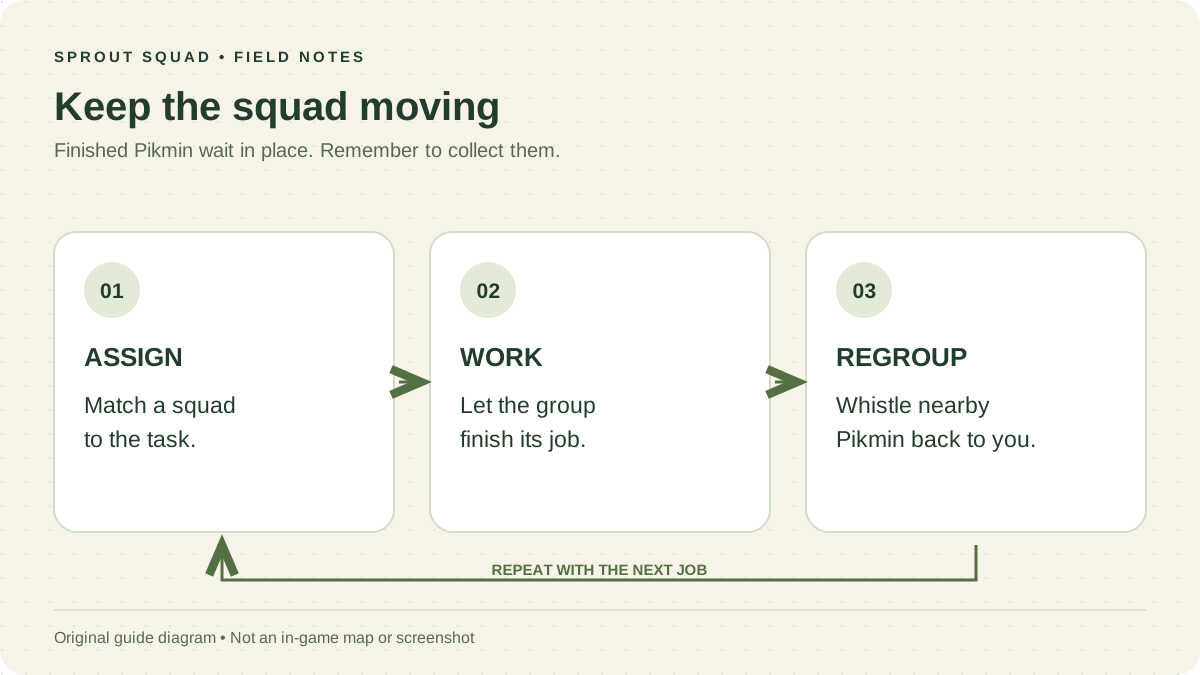
Assign a group, check that its work has actually started, then move to the next task. Revisit idle workers before descending. This is a decision process rather than a claim about the best route through a particular cave. No map coordinates or enemy timings are supplied without course-specific evidence.
Which five caves belong to the first region?
| Cave | Treasure entries in our verified checklist |
|---|---|
| Last-Frost Cavern | 2 |
| Crackling Cauldron | 6 |
| Aquiferous Summit | 4 |
| Industrial Maze | 5 |
| Hectic Hollows | 3 |
These are treasure completion entries, not floor counts, enemy counts or physical-item totals. The ten-nugget pile in Aquiferous Summit occupies one row. Open the tracker and select the cave to see its sourced names and sublevels.
Does finding a wild type unlock its Onion?
No. Nintendo explicitly distinguishes finding types underground from acquiring the matching Onion needed to grow that type from surface deliveries. Last-Frost Cavern’s wild Ice Pikmin are a useful example of why the two milestones must be tracked separately. See wild Pikmin versus Onions for the practical consequences.
What should you record when a run ends?
Record the cave, sublevel and unfinished task rather than a vague “come back later.” Note the required type or ability if known, and mark treasure only after confirmed delivery. If the reason for failure is uncertain, label it uncertain. That small discipline stops a guess from becoming the plan for your next visit.
Which sources were checked?
Verified 3 November 2026. Official confirmations and community references are labeled below. Advice is original editorial planning guidance; no personal gameplay test or optimal route is claimed.
Related Articles
exploration
Pikmin 4 Areas Guide: Where Your Adventure Takes You
Compare the six main Pikmin 4 exploration areas and use a location-first planning method for caves, treasures and return visits.
exploration
Sun-Speckled Terrace Treasure Checklist: All 34 Entries
A sourced breakdown of 14 surface and 20 cave treasure entries, with repeated names and Gold Nugget counting explained.
exploration
Pikmin 4 Treasure Guide: Collect, Check and Track
Use the Radar Map, Treasure Gauge and a local checklist to find missing Pikmin 4 treasures without confusing surface, cave and pile progress.
Was this helpful?
Thanks for the feedback!